The most revealing moment of my recent Kyoto trip was not at a Michelin-starred counter. It happened at 10:30 AM while standing in front of a sizzling croquette stand in Nishiki Market. I realized that while navigating the historic corridor often dubbed Kyoto's Kitchen, managing tourist trap price inflation is just as crucial as finding good dashi. This guided walking tour duration of three hours completely changed how I approach market eating. Priced at roughly ¥15,000, it bypasses the usual chaos, offering seven curated tastings and a sit-down brunch. If you want to understand the intricate umami salt levels of authentic obanzai without the headache of wait time management, this specific route delivers solid results. However, the pace is brisk. Those who prefer lingering for an hour over a single sake tasting flight might feel rushed, and the constant movement requires stamina. Here is my data-driven breakdown of the actual food quality, vendor connections, and whether this guided morning justifies the premium cost.
Analyzing the Itinerary and Local Vendor Relationships
The tour focuses on building direct access to authentic food stalls through established local vendor relationships. By leveraging an English-speaking guide's expertise, participants bypass 20-minute queues and interact directly with multi-generational shop owners along the market and Teramachi-dori.
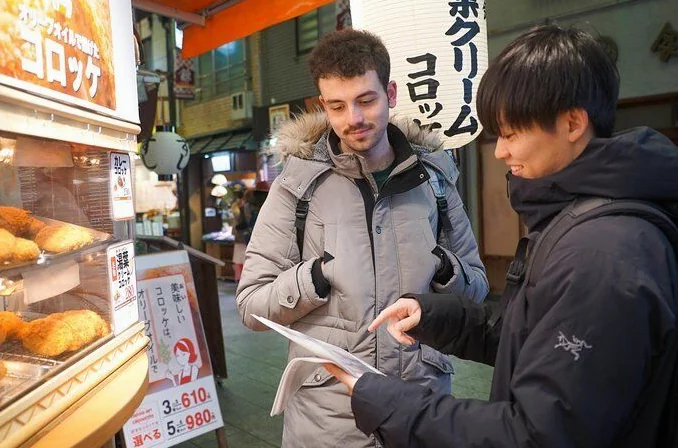
Tabelog scores work differently from Google ratings. A 3.5 on Tabelog is genuinely excellent, but I have found that Tabelog score correlation matters far less when you are handed a freshly fried beef croquette. The internal temperature and the immediate, shatter-crisp texture dictate the quality far more than a digital rating. While standing with our guide and the other participants in front of a popular croquette shop, I noticed the vendor handed our group freshly pulled batches rather than the ones sitting under the heat lamp. This insider access is where the MyRealTrip itinerary actually provides tangible value.
The Tasting Menu: From Dashi to Soy Milk
The tasting menu features seven distinct items highlighting local ingredients, including Kyoto-style Tsukemono, freshly fried soy milk donuts, and premium Yuba tofu skin. Each stop is designed to showcase the fundamental dashi broth base and freshness grading typical of traditional Japanese cuisine.
The absolute standout was the Dashimaki Tamago. Typically costing ¥500 per skewer if you buy it solo, the version we tasted was extraordinary. The egg layers were weeping with a rich kelp stock, proving that high-quality Japan food relies on technique rather than heavy seasoning. We also sampled Yuba tofu skin, which was served at exactly room temperature, slipping down the throat with a rich, nutty finish.
- Savory bites: Tamago, fish paste tempura, and pickled vegetables.
- Sweet finishes: Tiny soy milk donuts that were crisp outside and airy inside.
- Beverages: Cold Uji Matcha to cleanse the palate between heavy fried items.
Seafood and Seasonal Additions
Seafood offerings heavily feature Hamo daggertooth eel and seasonal Kyo-yasai depending on the month of your visit. These specific items represent the traditional local approach to balancing delicate marine flavors with regional agriculture.
Do not expect a heavy bowl of ramen or formal sushi omakase here. This is strictly a snacking and brunching affair. The Hamo daggertooth eel is a notorious Kyoto specialty; it is notoriously difficult to prepare due to its tiny bones. The stall we visited served it lightly blanched with a tart plum sauce. While local restaurants might charge ¥1,500 for a proper appetizer portion, this tasting size was perfectly adequate to judge the freshness grading.
Cost Analysis and Street Food Etiquette
The price per person analysis reveals that while standalone market items might cost less individually, the tour provides value through curated access and a guaranteed seated meal. Furthermore, strict street food etiquette is enforced, meaning eating while walking is strictly prohibited in the market corridors.
Kyoto has cracked down heavily on tourists eating while walking. Having a guide who knows exactly where to stand to consume your skewers without blocking traffic is a massive stress reliever.
Exploring the 400-year-old market known as Kyoto's Kitchen — Tour Description
When looking at the pure economics, you are paying for the curation. I calculated the raw cost of the 7 tastings and the sit-down brunch to be roughly ¥4,500. The remaining premium goes toward the guide's time and queue-jumping privileges.
| Experience Factor | Guided Tour Format | Typical Solo Visit |
|---|---|---|
| Wait Times | Bypassed via guide connections | 20-40 mins per popular stall |
| Vendor Interaction | Deep historical context provided | Strictly transactional |
| Dining Setup | Includes a seated, relaxed brunch | Standing in awkward corners |
Crucial Things to Consider Before Booking
Before booking, visitors should evaluate their physical mobility and preference for group dynamics, as the market gets incredibly crowded by noon. The fast-paced nature means you must balance eating quickly with listening to the historical context.
I highly recommend evaluating your personal travel style against these three specific factors:
- The hassle of finding restaurants and ordering yourself: This tour completely eliminates the need to translate handwritten menus or guess which stall has the best broth.
- Distractions from the food: The tour includes photo taking by the guide, which is a nice memory, but it can sometimes distract from focusing on the food while it is at its optimal serving temperature.
- Group dynamics: Consider the discomfort of large group tours; navigating narrow, crowded alleys with several people requires patience and situational awareness.
Frequently Asked Questions
Common questions regarding this market tour revolve around physical accessibility and exactly what the ticket price covers. Wheelchair access is unfortunately restricted due to narrow alleys, while the price covers all food, a guide, and a sit-down meal.
Q: Is wheelchair access available?
A: Wheelchair access is not available. The market corridors are incredibly narrow, heavily congested with unpredictable foot traffic, and most historic stalls lack proper ramps.
Q: What is included in the tour?
A: The tour includes photo taking, 7 food tastings, a restaurant brunch, and a certified guide.
Final Thoughts
this morning itinerary trades pure financial efficiency for deep cultural context and logistical ease. If your goal is simply to eat as cheaply as possible, go alone at 9:00 AM. But if you want to understand why a specific vendor's dashi has survived for three generations without spending half your morning standing in line, this structured approach is highly effective. Pay attention to the temperature of the food handed to you, ask the guide about the seasonal vegetables, and focus on the flavors rather than just snapping pictures.