The most revealing moment of my recent 4-hour Tsukiji market tour wasn't eating the fish—it was feeling the temperature of the rice. As a food journalist who spends most mornings analyzing the correlation between Tabelog scores and actual taste at local restaurants, I usually prefer dining over cooking. However, booking this combined market tour and sushi class offered a rare look at the mechanics behind Japanese cuisine. I wanted to see if a commercial hands-on cooking class curriculum could actually teach the nuances of Edomae-style sushi history and technique, or if it was just an overpriced tourist trap.
What to Expect from a Tsukiji Outer Market Food Tour
A standard Tsukiji tour combines 90 minutes of guided market exploration with a 120-minute cooking session. You will navigate crowded, narrow alleys to sample regional snacks while learning how to identify high-quality seafood from vendor displays.
Since the Toyosu Market wholesale transition relocated the major auctions, the historic Tsukiji Outer Market (Jogai Shijo) remains purely a retail and restaurant hub. This shift changed the dynamic of the area entirely. Walking through the stalls, I quickly realized why booking an organized tour makes sense for first-time visitors.
- Ingredient selection: There is a steep difficulty in selecting fresh seafood ingredients without knowing the subtle visual indicators of seasonal catches.
- Navigational challenges: The sheer complexity of the local market makes an English-speaking licensed guide essential to avoid wasting time in the wrong queues.
Navigating the Street Food Hopping Itinerary
The street food segment focuses on iconic, quick-bite snacks located near the main pedestrian intersections. Expect to spend an additional ¥1,500 to ¥2,800 out of pocket on individual items during this portion.
Our guide led us past the famous Tamagoyaki street food stands, where the sweet, dashi-infused omelets are cooked in rectangular copper pans. We took a brief detour near the Namiyoke Inari Shrine proximity to escape the dense crowds. One major benefit of this tour is efficiency. Wait time management at Daiwa Sushi and other famous counters in the area often exceeds 110 minutes. By skipping those brutal lines and heading straight to our own private kitchen, we saved nearly two hours of standing on concrete.
Understanding Wholesale vs. Retail Pricing
Retail prices in the outer market reflect a tourist premium of roughly 15-25% compared to actual wholesale rates. However, the baseline quality remains strictly regulated by multi-generational vendors.
During the tour, we examined the Uni (Sea urchin) provenance at several stalls. Honestly, this is where the market falls short for average consumers. The ¥4,500 wooden boxes of uni sold to tourists are a mixed bag. In my experience, you can find the exact same quality by doing an Isetan basement food hall comparison for about ¥800 less, without being elbowed by crowds. You pay for the atmosphere here, not necessarily the best wholesale vs. retail pricing.
The Hands-on Cooking Class Curriculum: Making Authentic Sushi
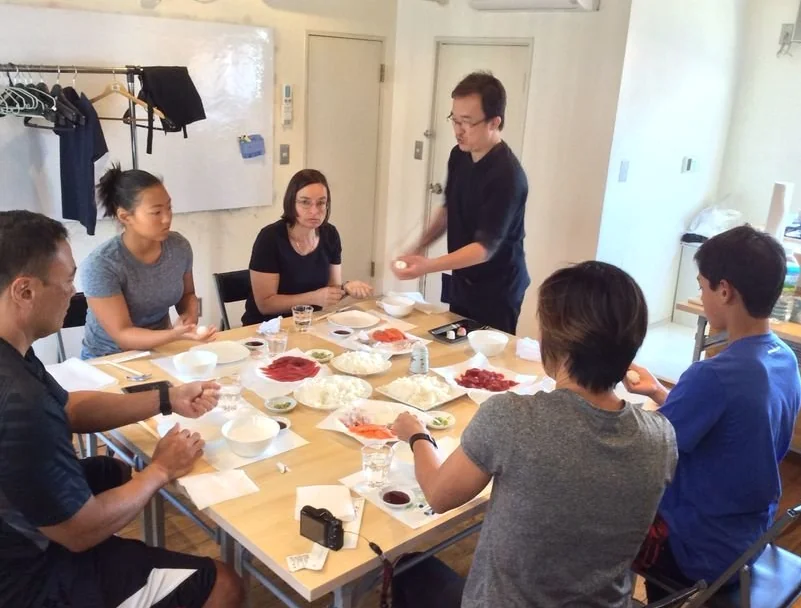
The cooking segment teaches practical preparation in a commercial-grade kitchen just blocks from the market. Participants learn to slice fish, season rice, and shape individual pieces under professional supervision.
| Class Specification | Curriculum Details | Practical Notes |
|---|---|---|
| Session Duration | 120 minutes total | Pacing is slightly aggressive |
| Core Seafood Used | Tuna, salmon, seasonal white fish | Sourced directly from market vendors |
| Class Size Limit | Capped at 8 participants | Allows for direct instructor feedback |
| Final Meal Included | 10-piece sushi board, hot soup | Eaten at the end of the session |
| Language Support | Fluent English instruction | Translates specific culinary terms |
Mastering the Nigiri-zushi Technique
Forming the rice correctly requires a delicate balance of pressure and temperature control. The goal is to create a slightly loose center that holds its shape but falls apart immediately when it hits your tongue.
Looking around the room, I watched students struggling to master the Nigiri-zushi technique. The secret lies in the Shari (vinegared rice) consistency. Our instructor explained the traditional Akazu (red vinegar) fermentation process, which gives authentic Edo-style rice its distinct brownish hue and complex acidity. It is much harder than it looks to keep the rice from sticking to your palms while applying just enough pressure.
"Participants learn how to select fresh ingredients at the world's largest fish market before bringing them back to the kitchen."
Fish Preparation and Knife Handling Skills
Proper fish preparation relies on sharp, single-bevel blades and a continuous, smooth slicing motion. You practice cutting rectangular blocks of fish before moving to more delicate seafood.
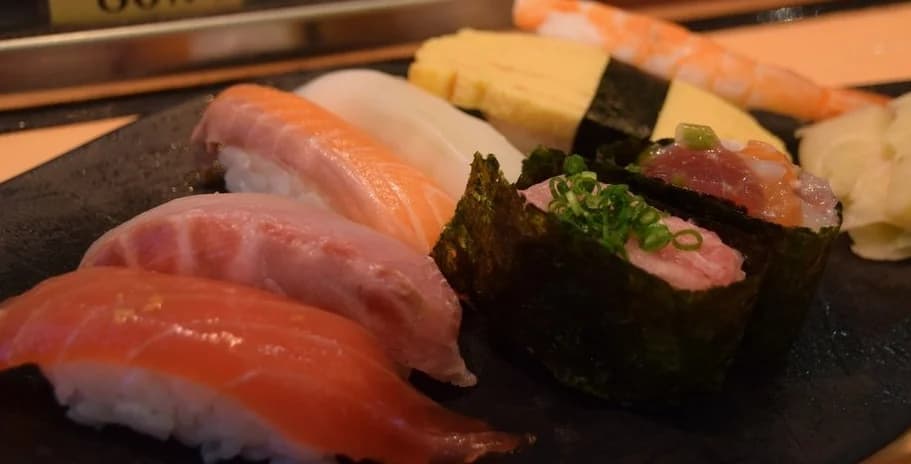
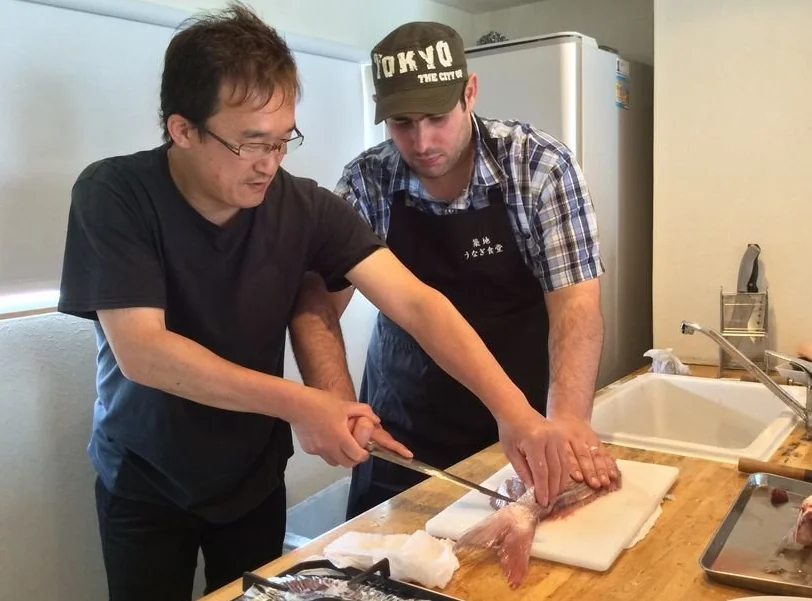
The instructor demonstrated proper Sushi knife handling skills, showing a participant how to pull the blade smoothly through the flesh without sawing. We worked with fresh cuts, learning about Hon-maguro (Bluefin tuna) grading and observing the distinct visual differences in Otoro vs. Chutoro fat content. Slicing the Neta (sushi toppings) seasonality requires precision. To balance the rich fats of the salmon and tuna, we practiced Fresh Wasabi (Hon-wasabi) grating on traditional sharkskin boards, which yields a creamy, sweet heat entirely different from the dyed horseradish paste sold in tubes.
Is the Price-to-Quality Ratio Worth It?
At approximately ¥16,500 per person, the price-to-quality ratio (cost-performance) is exceptionally solid for travelers wanting a comprehensive cultural experience. It effectively condenses a morning of market navigation and a specialized culinary workshop into one seamless morning.
Let's talk about Tabelog score analysis for a moment. Tabelog scores work differently from Google ratings. A 3.5 on Tabelog is genuinely good — most restaurants sit at 3.0-3.2. If you see a 3.8+, expect a massive wait. The sushi we made during this class obviously won't rival a 3.9-rated Ginza omakase counter. However, the quality of the raw materials provided was surprisingly close to a solid 3.4 Tabelog neighborhood sushi spot.
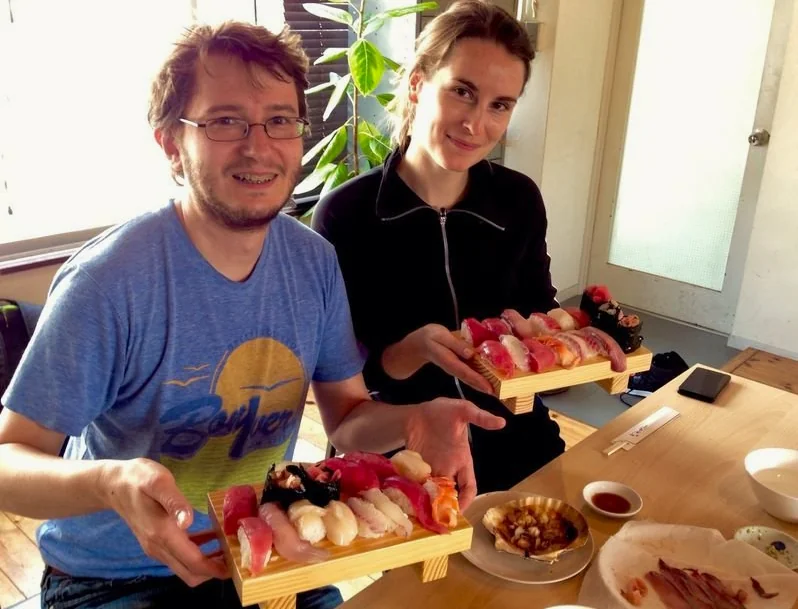
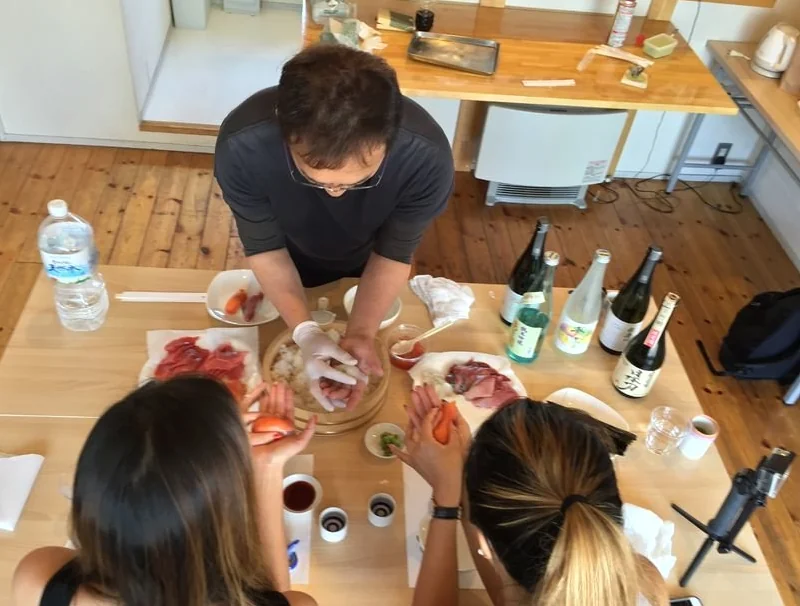
The sensory details of the final meal were satisfying. We learned the importance of Umami flavor profile balancing by whisking our own Miso soup dashi base to accompany the meal. Using Gari (pickled ginger) palate cleansing between the fatty tuna and the leaner white fish elevated the tasting experience. At the end, everyone proudly held up their self-made sushi on wooden boards, smiling at the slightly misshapen but incredibly fresh results.
There are downsides. The pacing is quite strict; if you linger too long at a market stall, the guide will rush you along to ensure you make the kitchen reservation. Also, if you are an advanced home cook, the knife skills portion might feel too basic. While I usually spend my mornings hunting down a rich bowl of ramen in Koenji, this hands-on experience offered a refreshing, tactile perspective on Japan food culture that you simply cannot get by just sitting at a restaurant counter.
What specific Japanese dish are you most intimidated to try making at home?
Frequently Asked Questions
Is the Tokyo Tsukiji Fish Market Tour & Sushi Making Experience worth the price?
Yes, it is worth it for anyone wanting a deep dive into Japanese cuisine beyond just dining at local restaurants. The experience combines a guided walk through the historic Tsukiji Outer Market (Jogai Shijo) with a professional sushi-making lesson. You gain expert knowledge on Nigiri-zushi techniques and Shari (vinegared rice) consistency that you simply can't get from a standard meal. For food enthusiasts tracking Tabelog scores, this hands-on perspective adds significant value to your culinary journey.
How long does the Tokyo Tsukiji Fish Market Tour & Sushi Making Experience take?
A typical tour and workshop last approximately 4 hours. Most sessions are split into a 90-minute exploration of the Tsukiji market stalls followed by a 120-minute hands-on sushi making class. Since many tours start in the morning to catch the freshest ingredients, it is the perfect half-day activity. This schedule allows you to experience the market's peak energy and enjoy your handmade sushi for lunch before heading off to explore other Tokyo attractions.
Can beginners join a Tokyo Tsukiji Fish Market Tour & Sushi Making Experience?
Absolutely, this experience is designed specifically for beginners and travelers with no prior cooking skills. Professional instructors provide step-by-step guidance on the Nigiri-zushi technique, teaching you how to mold the rice and slice the fish correctly. You'll learn the fundamentals of Japanese cuisine in a relaxed, friendly environment. It is a popular choice for families and solo travelers who want to learn the mechanics of sushi in an approachable, fun way.
What is the price of a Tokyo Tsukiji Fish Market Tour & Sushi Making Experience?
Prices generally range between $80 and $150 USD per person. The cost varies based on the quality of the fish provided and whether the session is a group or private experience. This price typically includes the guided market tour, all sushi ingredients, equipment rental, and the meal you prepare. Compared to high-end sushi restaurants in Tokyo, this offers a more interactive and educational way to enjoy premium Japanese seafood while learning a new skill.
Tsukiji vs Toyosu: which is better for a sushi making tour?
Tsukiji Outer Market (Jogai Shijo) is much better for a food tour and sushi class than Toyosu. While the wholesale transition moved the famous fish auctions to Toyosu, Tsukiji remains the vibrant center for food culture and local restaurants. The atmosphere in Tsukiji is more traditional and accessible for tourists, offering a wider variety of street food, ramen, and specialized kitchen tools. Most high-quality sushi making classes are still located around Tsukiji for this very reason.